.webp)
Track your order
All Offers
Track your order
All Offers
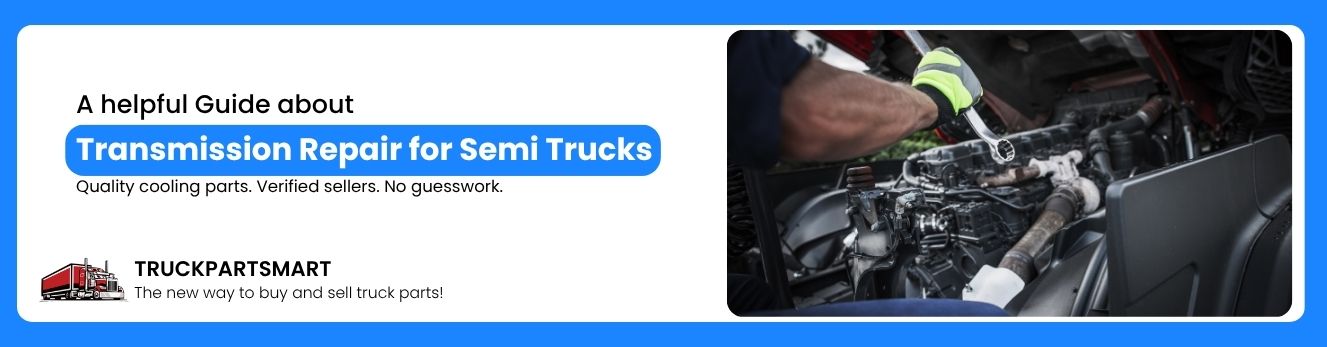
Your semi truck's transmission is one of the hardest-working components on the entire vehicle. It handles the full force of a diesel engine pushing 400 to 600 horsepower through a drivetrain loaded with 80,000 pounds of freight, mile after mile, shift after shift, across thousands of hours of operation.
When the transmission starts to fail, everything stops. The truck stops earning. The driver stops moving. And the repair bill — if you catch it late — can run anywhere from a few hundred dollars for a minor fix to $10,000 or more for a full rebuild or replacement.
This guide covers everything owner-operators, fleet managers, and commercial truck drivers need to know about semi truck transmission repair — warning signs, common problems, repair vs replace decisions, cost breakdowns, and how to find reliable service.
Understanding the basics helps you communicate with mechanics, ask the right questions, and avoid getting overcharged.
A semi truck transmission transfers power from the engine to the drivetrain by selecting the appropriate gear ratio for the current load, speed, and road condition. Heavy-duty trucks typically run either a manual transmission with 10, 13, or 18 speeds, or an automated manual transmission (AMT) that shifts automatically but uses the same mechanical components as a manual unit.
Fuller Eaton Transmissions are the most widely used manual and automated transmissions in North American heavy-duty trucks. The Fuller 10-speed manual and the Eaton Endurant AMT are found in Freightliner, Kenworth, Peterbilt, and International trucks across millions of operating units.
Volvo I-Shift is the proprietary AMT used in Volvo VNL series trucks. It is a highly capable automated system but requires Volvo-specific parts and software for repair and calibration.
Mack mDrive is the automated transmission used in Mack trucks, built on the same platform as Volvo I-Shift given their shared parent company.
Allison Automatic Transmissions are torque-converter automatics used primarily in vocational trucks, refuse vehicles, buses, and some heavy construction applications. They operate differently from AMTs and require specialized service.
Catching transmission problems early is the difference between a $500 repair and a $8,000 rebuild. These are the symptoms you should never ignore.
If your manual transmission is grinding, jumping out of gear, refusing to engage a particular gear, or requiring unusual force to shift, the problem is already progressing. Common causes include worn synchronizers, damaged shift forks, low transmission fluid, or a failing clutch assembly.
A healthy transmission runs quietly. Whining, grinding, clunking, or rattling sounds during operation — especially sounds that change with gear selection or load — indicate internal wear, bearing failure, or insufficient lubrication.
If the transmission slips out of gear under load or feels like it briefly loses power transfer between engine and drivetrain, this is a serious symptom. Under heavy freight loads, gear slippage is a safety issue, not just a mechanical one.
In automated transmissions like the Eaton Endurant or Volvo I-Shift, hesitation during upshifts or downshifts, harsh gear changes, or the transmission holding gears longer than normal often indicate software calibration issues, sensor failures, or mechanical wear beginning to affect shift logic.
Modern AMTs monitor themselves constantly. A transmission warning light or an active fault code on your dash is the truck telling you something is wrong before it becomes worse. Do not clear codes and keep driving without investigating. Pull the codes, understand what they mean, and act accordingly.
Transmission fluid pooling under your truck, visible leaks around seals and gaskets, or a burning smell from the transmission area all point to fluid system issues. Running a transmission low on fluid causes rapid internal damage that accelerates into full failure quickly.
Transmission temperature warnings are serious. Overheating breaks down fluid viscosity, accelerates wear on all internal components, and can cause catastrophic failure if the truck continues operating under load.
On manual transmissions, the clutch is the component that takes the most abuse. Clutch wear is normal over time, but aggressive driving habits, riding the clutch, and heavy stop-and-go operation accelerate wear significantly. A worn clutch affects the transmission's ability to shift cleanly and puts stress on synchronizers and gear faces.
Synchronizers allow smooth gear engagement by matching shaft speeds before the gear locks in. Worn synchronizers cause grinding on engagement, difficulty finding gears, and eventually prevent clean shifting entirely. This is one of the most common manual transmission repairs on high-mileage semi trucks.
Main shaft bearings, countershaft bearings, and output shaft bearings all wear over time. Bearing failure often announces itself with whining or grinding noises before it causes secondary damage. Catching a bearing early is a relatively contained repair. Letting it go until it seizes causes cascading damage to gears, shafts, and the case itself.
Direct gear damage — chipped gear teeth, worn gear faces — typically results from operating with worn synchronizers, shifting under improper load conditions, or severe lubrication failure. Gear damage usually requires partial or full rebuild.
Automated transmissions rely on a network of solenoids, speed sensors, and position sensors to execute shifts. Solenoid failure causes incorrect shift timing, missed gears, or the transmission defaulting to limp mode. These are often relatively affordable repairs — the part itself is not expensive — but they require proper diagnostic equipment to identify correctly.
The TCM is the brain of an automated manual transmission. It processes sensor inputs and commands every shift. TCM failures can cause erratic shifting, fault codes, or complete transmission shutdown. Like ECM modules, TCM replacements require programming specific to the truck's configuration.
Water intrusion, coolant leaks into the transmission, or extended fluid change intervals cause fluid contamination that breaks down lubrication and accelerates wear across all internal components. A transmission fluid analysis can identify contamination before it causes major damage.
This is the decision that has the biggest financial impact, and it deserves careful thought rather than a rushed call in the middle of a breakdown.
For isolated component failures — a single solenoid, a sensor, a seal, a shift fork — targeted repair is the right approach. You fix the specific failed component, verify the rest of the transmission is in acceptable condition, and return the truck to service. Cost is typically $500 to $2,500 depending on parts and labor.
A rebuild tears down the entire transmission, inspects every component, replaces all worn or damaged parts, installs new seals and gaskets throughout, and reassembles to factory specification. A quality rebuild from a reputable shop gives you essentially a fresh transmission at a fraction of new unit cost. Cost typically runs $3,000 to $7,000 for a heavy-duty rebuild depending on what is found inside.
A remanufactured transmission is rebuilt in a controlled factory environment to OEM specifications, typically with a warranty. Swapping in a reman unit is often faster than waiting for a rebuild and provides predictable cost. Many operators prefer reman units for the warranty coverage. Cost typically runs $4,000 to $8,000 plus labor for the swap.
A new OEM transmission is the most expensive option but provides the longest service life and full manufacturer warranty. This makes sense for newer trucks under warranty or for fleet operators who need maximum reliability and predictability. Cost can run $8,000 to $15,000 or more depending on transmission type and truck application.
Consider the truck's age and overall condition. A transmission rebuild on a truck with 800,000 miles and a tired engine may not make financial sense. Consider the cost of the repair relative to the truck's current market value. Consider how critical uptime is to your operation. For a single owner-operator truck that is the business, a reman unit with a warranty often provides the best balance of cost, speed, and reliability.
Labor rates at commercial truck repair shops typically run $100 to $175 per hour. Transmission work is labor-intensive — a full rebuild or swap can run 15 to 30 hours of shop time.
General automotive shops do not have the equipment, experience, or parts access for semi truck transmission work. You need a shop that specializes in heavy-duty commercial vehicles. Ask specifically whether they have experience with your transmission type — a shop experienced with Fuller 10-speeds may have limited experience with Volvo I-Shift or Allison automatics.
Modern AMTs require manufacturer-level diagnostic software to read fault codes correctly and program replacement components. Before authorizing any AMT repair, confirm the shop has the diagnostic tools for your specific transmission. Eaton ServiceRanger, Volvo VCADS, and Mack V-MAC are proprietary systems — not every shop has them.
Ask whether the shop uses OEM parts, remanufactured OEM components, or aftermarket parts. For transmission internals — synchronizers, bearings, solenoids, TCMs — OEM or OEM-remanufactured parts provide the best reliability. Cheap aftermarket transmission internals are a false economy.
Any reputable shop will provide a written estimate before work begins and a written warranty on parts and labor after completion. Industry standard warranty on a full transmission rebuild is 12 months or 100,000 miles. Be cautious of shops unwilling to put warranty terms in writing.
For initial diagnostics — pulling fault codes, identifying the problem before deciding where to take the truck — mobile truck repair services can come to you. This is particularly useful if the truck is loaded and moving it to a shop creates additional cost or complications.
The most affordable transmission repair is the one you prevent entirely.
Change transmission fluid on schedule. Most heavy-duty transmission manufacturers specify fluid changes every 250,000 miles or per the OEM service interval. Synthetic fluids extend this interval on some applications. Do not skip fluid changes — degraded fluid is the leading cause of accelerated internal wear.
Address small problems immediately. A fault code, a minor leak, or a slight change in shift quality are the transmission telling you something is developing. Addressing it at that stage costs a fraction of what it costs after continued operation makes the problem worse.
Specify the correct fluid. Using the wrong transmission fluid type is a common and damaging mistake. Always verify the OEM-specified fluid for your specific transmission model. Eaton, Volvo, and Allison all have specific fluid requirements that are not interchangeable.
Train drivers on proper shifting technique. For manual transmissions, driver technique has a direct impact on clutch and synchronizer longevity. Skip-shifting at appropriate speeds, avoiding lugging the engine in too high a gear, and not riding the clutch in traffic all extend transmission life significantly.
Run regular fluid analysis. A transmission fluid analysis costs $25 to $50 and can detect metal particles, water contamination, and fluid breakdown before they cause visible symptoms. For high-value fleet assets, this is inexpensive insurance.
A semi truck transmission is not a component you can afford to ignore or defer on. It sits between your engine and your wheels — when it fails, the truck fails, and every day off the road has a direct cost to your operation.
The good news is that most transmission failures give you warning before they become catastrophic. Unusual noises, fault codes, shifting issues, and fluid leaks are all early signals that something needs attention. Acting on those signals early keeps repair costs manageable and keeps your truck earning.
Whether you need a minor repair, a full rebuild, or a remanufactured unit swap, find a heavy-duty specialized shop with the right diagnostic tools for your transmission type, insist on OEM-quality parts, and get your warranty in writing.
Your transmission keeps your truck moving. Treat it accordingly.
A well-maintained heavy-duty transmission typically lasts 500,000 to 750,000 miles. With proper fluid maintenance, quality parts, and good driving habits, some transmissions reach 1,000,000 miles before requiring a major rebuild. Neglected transmissions can fail well before 300,000 miles.
No. A slipping transmission under load is a safety hazard. It indicates the transmission cannot reliably transfer power from the engine to the drivetrain, which can cause loss of control on grades or in traffic. Pull the truck out of service and have it inspected immediately.
A full transmission rebuild at a qualified heavy-duty shop typically takes 3 to 7 business days depending on parts availability and shop workload. A reman unit swap can often be completed in 1 to 2 days since the replacement unit is ready to install.
A rebuild is performed on your existing transmission unit by a local shop. A remanufactured unit is your existing transmission replaced with a factory-rebuilt unit that has been restored to OEM specifications in a controlled environment, typically with a national warranty. Reman units are often preferred for their warranty coverage and faster turnaround.
Significantly. A Fuller 10-speed manual is one of the most common and most serviceable transmissions in North America — parts are widely available and most heavy-duty shops know them well. AMTs like the Eaton Endurant, Volvo I-Shift, and Mack mDrive require specialized diagnostic tools and software, which limits the number of shops that can work on them correctly and affects labor cost.
Clutch problems typically manifest as difficulty engaging gears from neutral, slippage when accelerating under load, or a burning smell during heavy use. Gearbox problems typically manifest as grinding or popping out of specific gears, unusual noises while in gear, or complete inability to engage certain gear positions. A qualified technician can differentiate these through a structured inspection.
Looking for transmission parts for your semi truck? Browse TruckPartSmart for verified OEM and used transmission components — Fuller Eaton, Volvo I-Shift, Mack mDrive, and more — from sellers across the USA.
Get daily news on upcoming offers from many sellers all over the world.
Download the app today and be part of the new TRUCKPARTSMART marketplace! It's the only marketplace app strictly for truck parts and truck-related services.




© TRUCKPARTSMART current_year. All rights reserved.